Liquid Gold: The Remarkable Science Behind Raw Honey's Healing Properties
From ancient Egyptian medicine to modern antimicrobial research — why raw honey is one of nature's most powerful foods.
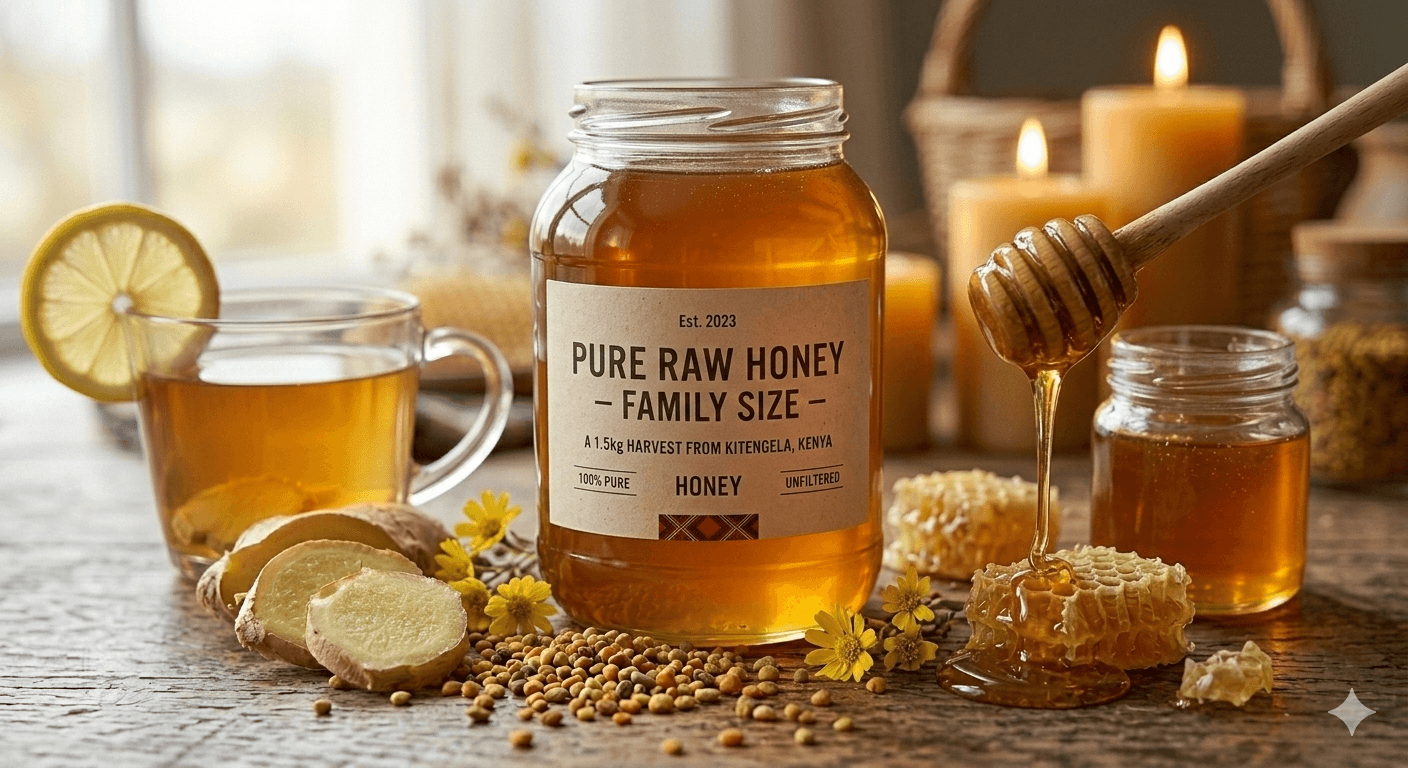
When archaeologists excavated Egyptian tombs dating back 3,000 years, they found sealed ceramic pots containing honey. When they opened the pots, the honey was still edible. Nothing else organic discovered in those tombs had survived. Honey had. This fact alone should tell us something about what we are dealing with. **Why Raw Honey Is Different from Processed Honey** The honey sold in most supermarkets has been heated to temperatures above 70°C, filtered, and sometimes blended with glucose syrup. This process gives it a clear, uniform appearance and prevents crystallisation. It also destroys most of what makes honey medicinally interesting. Raw honey — cold-extracted and minimally filtered — retains: - Live enzymes, including glucose oxidase (which produces hydrogen peroxide, a natural antimicrobial) - Bee pollen, which contains 250+ active compounds including flavonoids and amino acids - Propolis traces, with powerful antibacterial properties - Methylglyoxal and other organic acids that give honey its characteristic antimicrobial activity - Antioxidant polyphenols, with concentrations varying dramatically by botanical source **The Antimicrobial Properties** Honey's resistance to microbial growth has multiple mechanisms. Its low water activity means bacteria cannot absorb enough moisture to multiply. Its low pH (3.5–4.5 in most raw honeys) creates an acidic environment hostile to pathogens. And the hydrogen peroxide produced by glucose oxidase acts as a slow-release antiseptic. Clinical studies from the University of Auckland (Waikato Honey Research Unit) and the USDA have demonstrated that raw honey can inhibit over 60 species of bacteria, including antibiotic-resistant strains like MRSA. **Traditional Use in Kenya** In Maasai medical tradition, honey is used to dress wounds, treat upper respiratory infections, soothe inflammation, and support post-partum recovery. The Loodokilani cooperative members we work with can describe specific uses for different honey varieties — darker honey from leleshwa shrubland is considered more potent medicinally; lighter acacia honey is preferred for children. These distinctions are not merely cultural — they likely reflect genuine differences in polyphenol content and antimicrobial activity that correspond to the botanical source of the nectar. **Our Honey** The raw honey produced by Mama Nyuki Foundation hives is cold-extracted using a hand-cranked radial extractor at ambient temperature, strained through a single 200-micron mesh to remove wax fragments, and poured directly into sterilised jars without heating. No additives. No glucose syrup. No heat processing. What you receive is what the bees produced — as close to the comb as a liquid product can be, with all the enzymes, pollen, and antimicrobial compounds intact. Every jar sold supports our education and reintegration programs. There is no other honey on the Kenyan market that can say the same.